From "how" to"what": The real implications of artificial intelligence
AI is not simply a technological revolution. It is technology precipitating an evolutionary leap in the mental paradigm.
AI is not simply a technological revolution. It is technology precipitating an evolutionary leap in the mental paradigm.
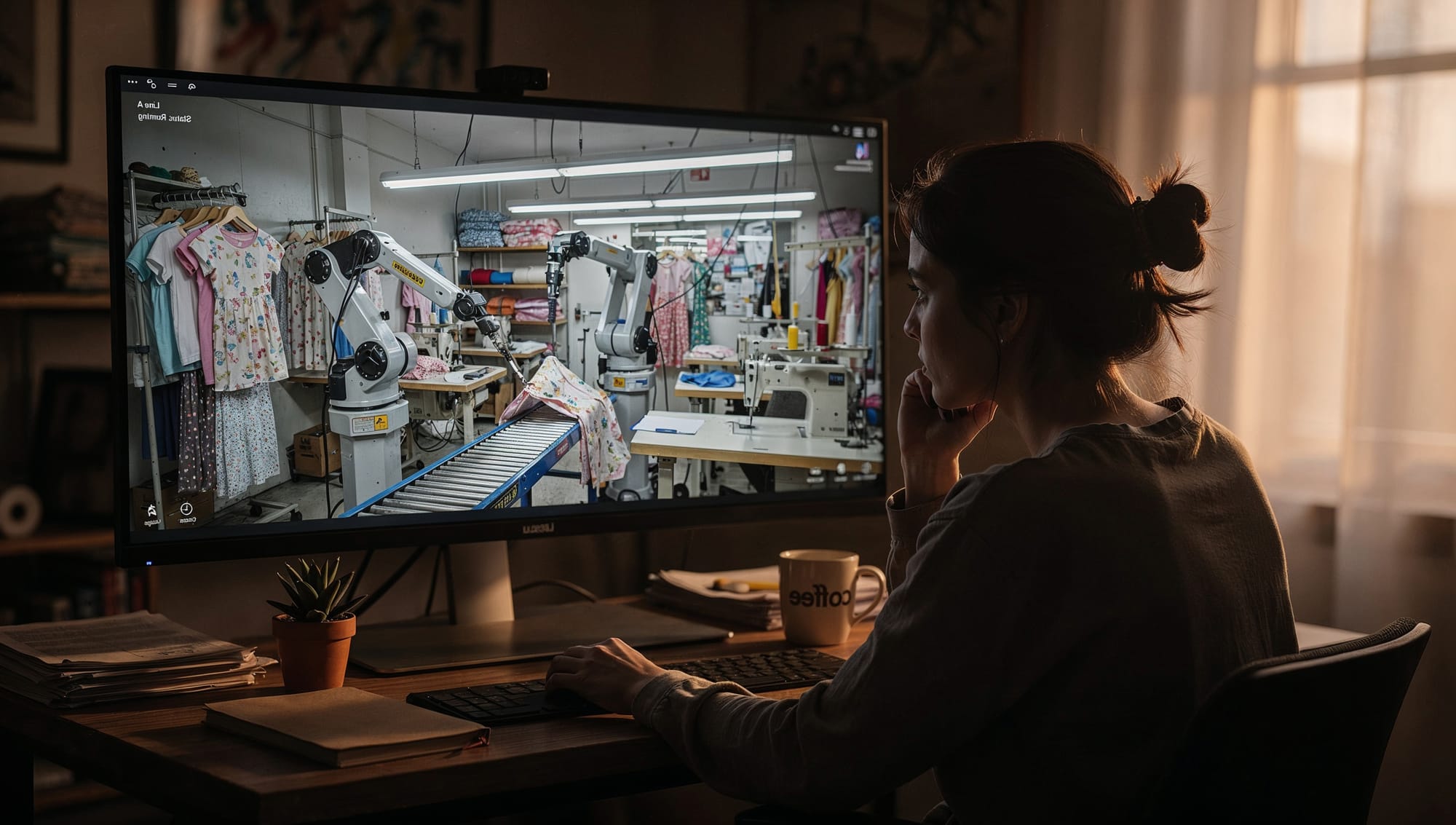
AI is not simply a technological revolution. It is technology precipitating an evolutionary leap in the mental paradigm that has dominated humanity since the Industrial Revolution.
Since the earliest days of civilization — when the most advanced of humanity's activities amounted to finding food, building simple shelter, and crafting tools — the primary differentiator among us has been how. How we do things. How we make things. How we solve problems. The entire arc of human progress has, in a very real sense, been an arc of method.
And technology has progressively abstracted that method. The wheel, the lever, the plough — arguably more transformative inventions — extended what the human body could do.
On a completely different level, Gutenberg's printing press was the first invention whose purpose was the dissemination of knowledge itself. Suddenly, how could be captured, transmitted, and scaled far beyond the master-apprentice relationship. It was this — the wide circulation of method and discovery — that made the Industrial Revolution possible, collapsing what had been done by hand and simple tool into machines that could do the work for us.
The internet was the electronic explosion of what the press began — the accumulated knowledge of how to do virtually anything, made accessible to anyone with a connection.
Artificial intelligence is now taking this trajectory to its logical conclusion. It is not merely providing access to knowledge about how — it is encapsulating the how itself, abstracting it away into artificial neural processes that can be invoked on demand. The distance from thought to manifestation, which once spanned lifetimes, then decades, has, in just a couple of years, folded almost to nothing.
Consider what this means in practice. Ten years ago, someone with a very good mind setting out to build something of real complexity — a business, a product, an organization — unless they were privileged enough to have received training in the internals of every component, or wealthy enough to hire those who had, reached a hard limit all too soon. The gap between vision and execution was vast, and the barrier was access to the how.
Today, that same person can describe their idea to a large language model that encapsulates this training, and the system they envisioned — once completely out of reach — can be, to a large extent, materialized.
It is clear to me that with wide adoption and access to artificial intelligence, and specifically large language models, we are slowly but surely moving away from how as gatekeeper — the standard by which ability was measured — and toward what. What do you actually want to build? What problem do you see? What do you envision?
This might sound rather simplistic, but it is a monumental paradigm shift. The move away from being a "cog" in the "machine" to being its creator and controller is now being democratized — or popularized, whichever way you prefer to see it.
This is a time for all kinds of innovators and thinkers, in every domain and at every level. But only if we take responsibility for how we engage with it — if we resist the reflex to receive it the way we have learned to receive everything else: as passive, thoughtless consumers — products ourselves of decades of market-driven conditioning.
Mostly, it is a time for synthesizers and integrators. What used to constitute an entire system — a complete undertaking in its own right — can now, given the power available, be treated as simply a component in a far larger orchestration. The unit of work has shifted upward. The scale of what one mind can bring together has expanded dramatically.
If this new technology is competing with our own intelligence — which on some level it arguably is — and with our current work hours, then let that competition be a driver for us to level up. Let us willingly delegate that intelligence which is fast becoming a commodity, and operate at a higher level of thinking. Let us turn those work hours now being displaced — parts of our lives we were giving away in exchange for money — into space where we ask ourselves, with courage and optimism: What now? The threat to the common person's livelihood is real, but only if the system that supports it remains the same. It will not. The world is changing before our very eyes.
But if we remain entrenched in a consumerist slumber of pure awe and admiration, which is, by virtue of human temperament, only transient anyway, the gap between who we are allowing ourselves to be and who we are truly able and willing to become will grow ever wider. And this cannot possibly be the best way forward.
Artificial intelligence is by far the most sophisticated technological toy we have ever had. But let the excitement, enthusiasm, and fun that always accompany a new discovery not linger far too long. It's not about what it can do. It's about what we can do with it.
Your link has expired. Please request a new one.
Your link has expired. Please request a new one.
Your link has expired. Please request a new one.
Great! You've successfully signed up.
Great! You've successfully signed up.
Welcome back! You've successfully signed in.
Success! You now have access to additional content.